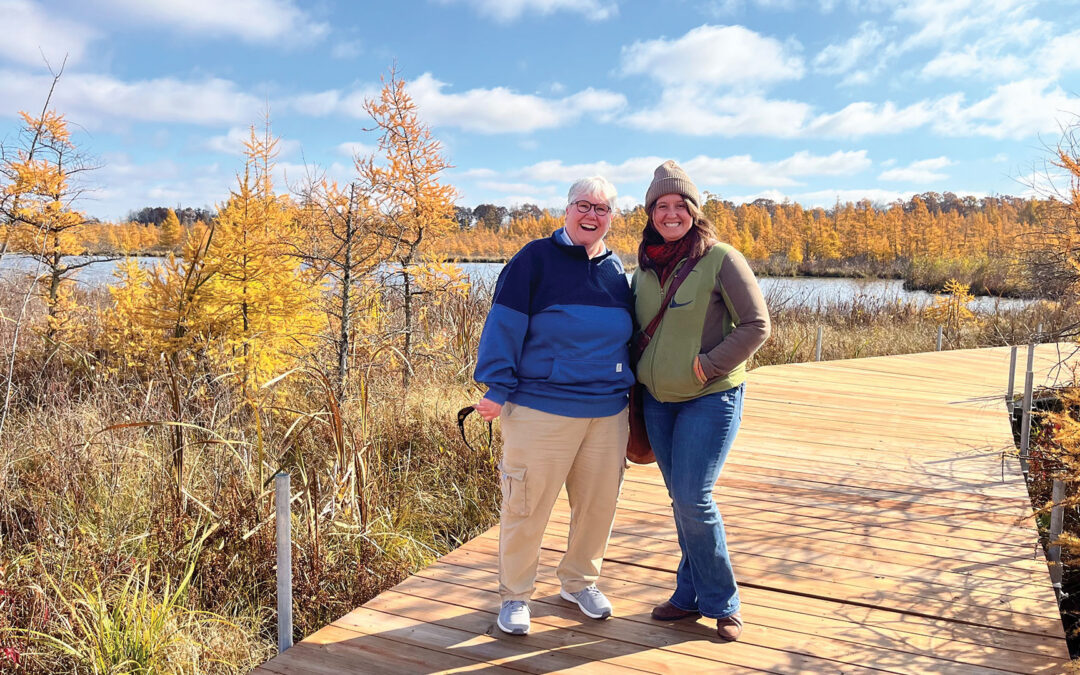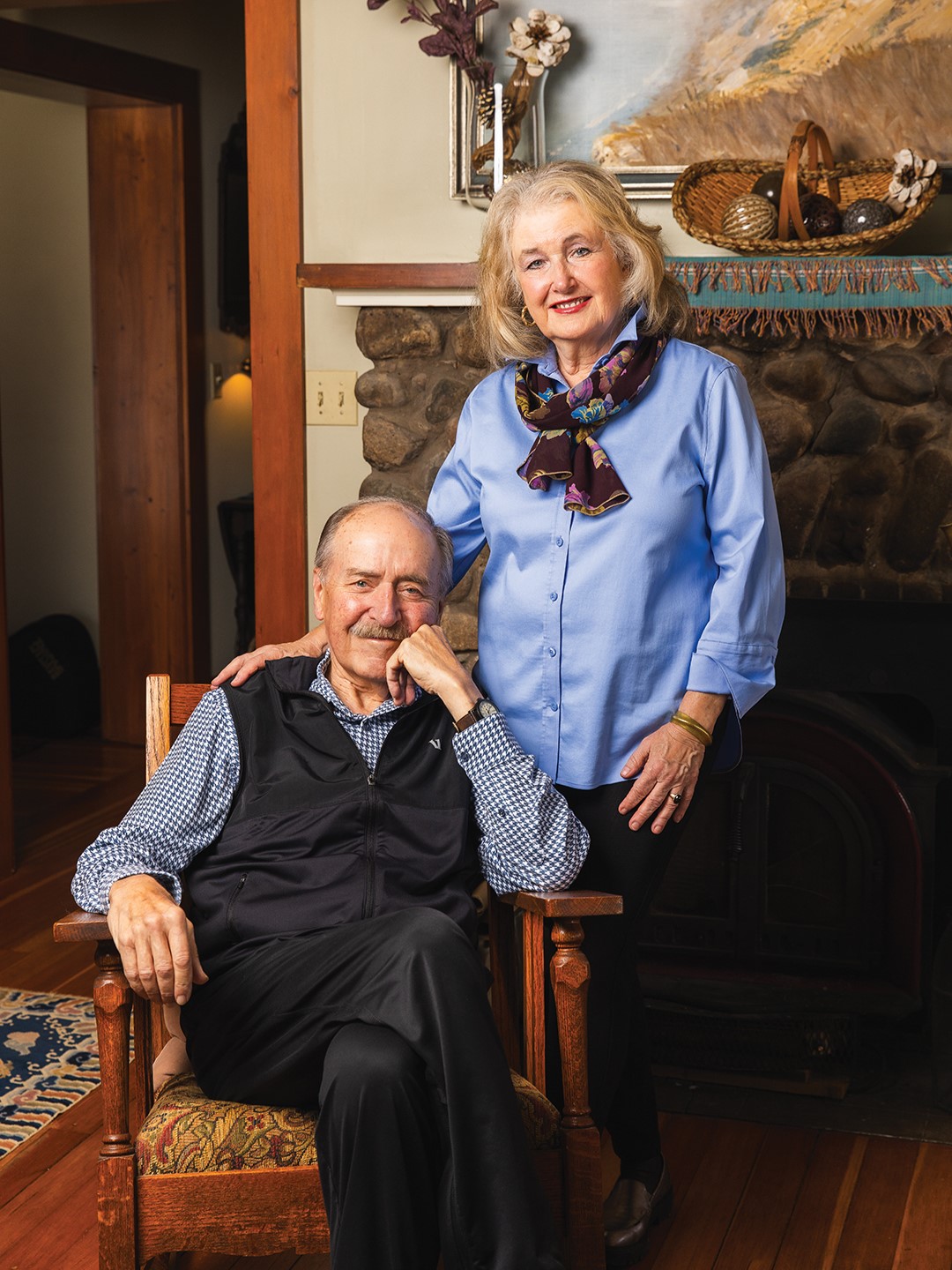
Jared and Melinda Hoke. Photos: Chris Emeott
Jared and Melinda Hoke reflect on their journey to visit all 66 state parks.
For the past 50 years, Marine on St. Croix residents Jared and Melinda Hoke have had a front row seat to Minnesota’s majestic beauty. Just outside the couple’s historic log home on the bluffs, the St. Croix River flows steadfast through the seasons.
It’s a sight they’ve come to appreciate all the more after completing a grand adventure to hike all of Minnesota’s 66 state parks. “You think you’re the center of your own story … you get out there, and you realize the story is so much bigger,” Melinda says.
The journey began during a difficult period for the Hokes. Following a surgery in 2008, Jared’s immune system “went into overdrive,” he says. Within a matter of days, he couldn’t walk. Jared was diagnosed and treated for psoriatic arthritis, and it would take a full year of physical therapy to get him back on his feet.
Avid cyclists and hikers, the Hokes were familiar with Minnesota’s state park system, and visits to parks became key to Jared’s recovery. “I’d wheel him around before he was able to do his walking again,” Melinda says.
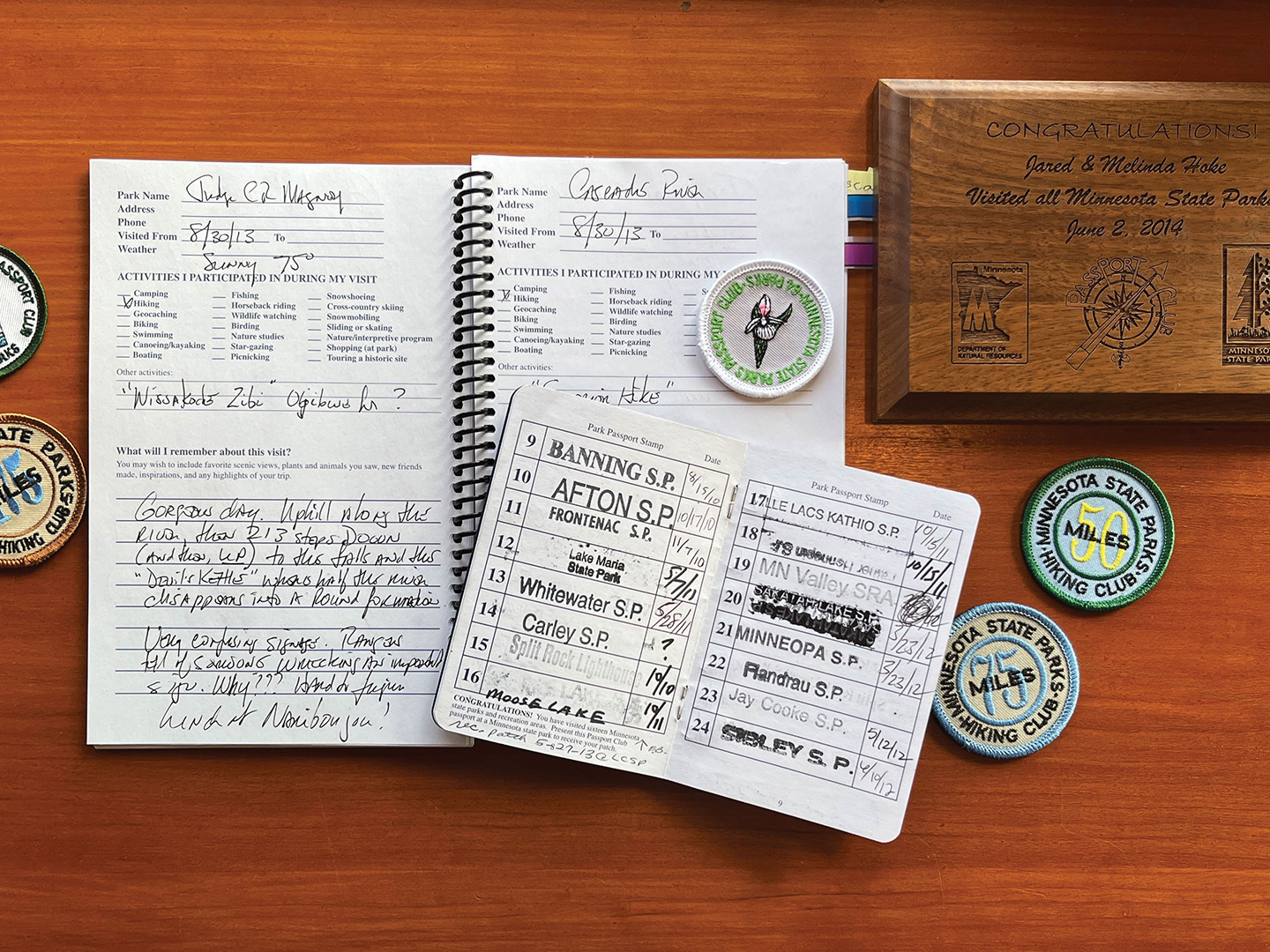
The Hokes tracked their journey with a provided Passport Club booklet. They received a stamp for each completed hike and journaled about their experiences in a travel log. Photo: Zoe Yates
On one such trip, the Hokes discovered the Minnesota DNR’s Hiking and Passport Clubs, programs that encourage people to log miles at state parks while earning rewards. Each of Minnesota’s state parks (including recreation areas and some waysides) features designated Hiking Club trails. “That quest to hike all the parks became a pilgrimage through all of these layers of what Minnesota really is … the history, the volunteerism, all of the peoples over 9,000 years who inhabited Minnesota, the resources, the geography, the cultures, the whole story,” Melinda says.
One step at a time, the Hokes embraced healing and exploration. Day trips to local parks became weekend trips across the state, where they hiked multiple 2- to 6-mile trails each day. Joined by their dog, Boomer, the Hokes found themselves exploring wide, secluded prairies in the west, traversing bogs in the north and climbing rugged terrain in the east.
Serendipitously, the final stamp on the Hokes’ passport came on their 30th wedding anniversary at one of their most-visited parks—William O’Brien State Park in Marine on St. Croix. On their way home from the last leg of their trip, they squeezed in the 6.5-mile trail. Four years after starting their journey, the Hokes returned home exhausted, joyous and forever changed—with many stories to share.
That was back in 2014, but it wasn’t until 2025 that the Hokes devoted themselves to sharing their story, offering insight into the diverse cultural and ecological landscapes of Minnesota with a presentation that includes music, photography and words. Melinda encourages people to embrace not just the natural beauty of these places, but “the connection of the park itself to the history of Minnesota, to the cultures of Minnesota, to the spirit of who we are,” she says.
Dig Deeper
For thousands of years, the land that is now Minnesota has been tended, preserved and maintained by dedicated people of many cultures. Today, Minnesota State Parks see around 11 million visitors annually, and it takes a great amount of work to care for these places, build trails and increase accessibility for all. “If it weren’t for some people that were very public-spirited and very outward-directed and very patient and intelligent and giving, we wouldn’t have it. And it’d be gone,” Jared Hoke says.
Many of the couple’s most memorable hikes (including Fort Snelling State Park in St. Paul, Nerstrand Big Woods State Park in Nerstrand and Big Bog State Recreation Area in Waskish) feature a blend of historical and ecological significance. The Hokes hope others are inspired to get to know their state’s landscape and history. “We want people to get out there, and not just get out there, but dig deeper and understand more, not just take it for granted,” Melinda Hoke says.